

Make Money Online Without Showing Your Face Using Pinterest
You can build online income without putting your face on camera. Learning how to make money online without showing your face starts with choosing a platform, sharing useful content, and giving interested readers a clear next step. Pinterest can guide people to a blog or digital product, while helpful content and follow-through build trust.
Wanting more privacy is understandable, especially when life is already full and appearing on camera feels like one more task. You can create with pins, text, screen recordings, or simple visuals instead. Choose platforms that fit your routine, find formats you can keep up with, and use Pinterest to guide the right people to your content. Clear, useful information can build credibility without putting your personal life in the spotlight. Start small, with each piece of content serving a purpose.
Key Takeaways
- Choose one or two platforms that fit your routine, then build a posting rhythm you can maintain.
- Use Pinterest pins to lead interested readers toward helpful blog content or digital products.
- Explore faceless formats such as text-led videos, screen recordings, and educational carousels.
- Build trust with clear, useful content and examples that show what your audience can expect.
Choosing platforms and creating consistently
Choose a platform based on the content you can create and the audience you want to reach. A Pinterest creator might share visual guides, while a YouTube creator could publish screen-recorded tutorials. Begin with one or two platforms and choose a repeatable format to keep your ideas focused and your publishing routine manageable.
Consistency doesn’t mean posting every day. Pinterest content can be published regularly without daily interaction, which can suit creators with limited time. Choose a rhythm you can maintain, such as preparing several pins in one sitting and scheduling them across the week. Reuse a topic in different formats, such as a checklist, a short tutorial, and a blog graphic.
- Pinterest: Create visual pins that point to helpful guides or product pages.
- Instagram: Share educational carousels or story highlights without appearing on camera.
- TikTok: Pair text with relevant video clips to explain one small idea.
- YouTube: Use screen recordings to demonstrate a process or digital tool.
Choose one specific offer before creating a stream of unrelated posts. It might be an affiliate recommendation, a digital download, or a service that fits your skills. For example, a meal-planning creator could share a weekly planning guide and connect it to a relevant printable. Each post can then answer a question and introduce a fitting next step.
For US creators, keep 1099 forms, platform statements, and expense records together to understand income and spending. Tax treatment can depend on the type of earnings and the creator’s circumstances, so organize records for accurate reporting.
Yes, affiliate marketing can work without showing your face. Choose products that fit your topic, create useful content about them, and direct readers to your affiliate links.
A focused audience matters more than broad reach alone. A creator with 500 aligned readers can potentially earn more than someone with 50,000 random followers. Let that guide your platform and offer choices: serve a clear need, then publish content that helps the right people find it.
Pinterest traffic to blogs and digital products
A Pinterest pin can take readers from a visual idea to a useful blog guide. Build each pin around a clear need, such as planning a family holiday or organizing a small workspace. Link to a page that addresses that need, rather than a general homepage. When the pin’s promise matches the landing page, visitors can find the next step more easily.
Try a curated moodboard or a short vertical video that previews your guide. For example, a pin showing a weekly meal-planning layout can lead to a blog post explaining the process. Add a clear title to the image and tell readers what they’ll find after clicking. Keep the destination focused, with related content or a relevant download nearby.
- Blog guide: Use a pin to introduce a tutorial, then link to the complete instructions.
- Printable: Preview a holiday activity sheet and direct visitors to its product page.
- Digital course: Share a pin about a specific challenge, then lead readers to a course page explaining its lessons and intended audience.
A course funnel can start with a helpful article rather than a hard sell. A pin about beginner meal planning might lead to a detailed blog guide, which can offer a related course as a deeper learning option. Explain what the course covers, who it suits, and how it builds on the free information. Readers should understand its value before deciding whether to continue.
You can sell digital products, printables, or stock media under a brand name instead of making your face the focus. Create product-led listings, write clear descriptions, and direct Pinterest visitors to the relevant sales page. A creator name can separate public-facing content from personal branding, though payment and tax processes may still require private identifying details.
For a more organized publishing routine, use social media guides to plan content around a consistent topic. A pin should set an accurate expectation, and its linked page should deliver the promised resource. That simple match helps turn browsing into a useful experience, whether the destination is a blog tutorial, a printable, or a digital course.
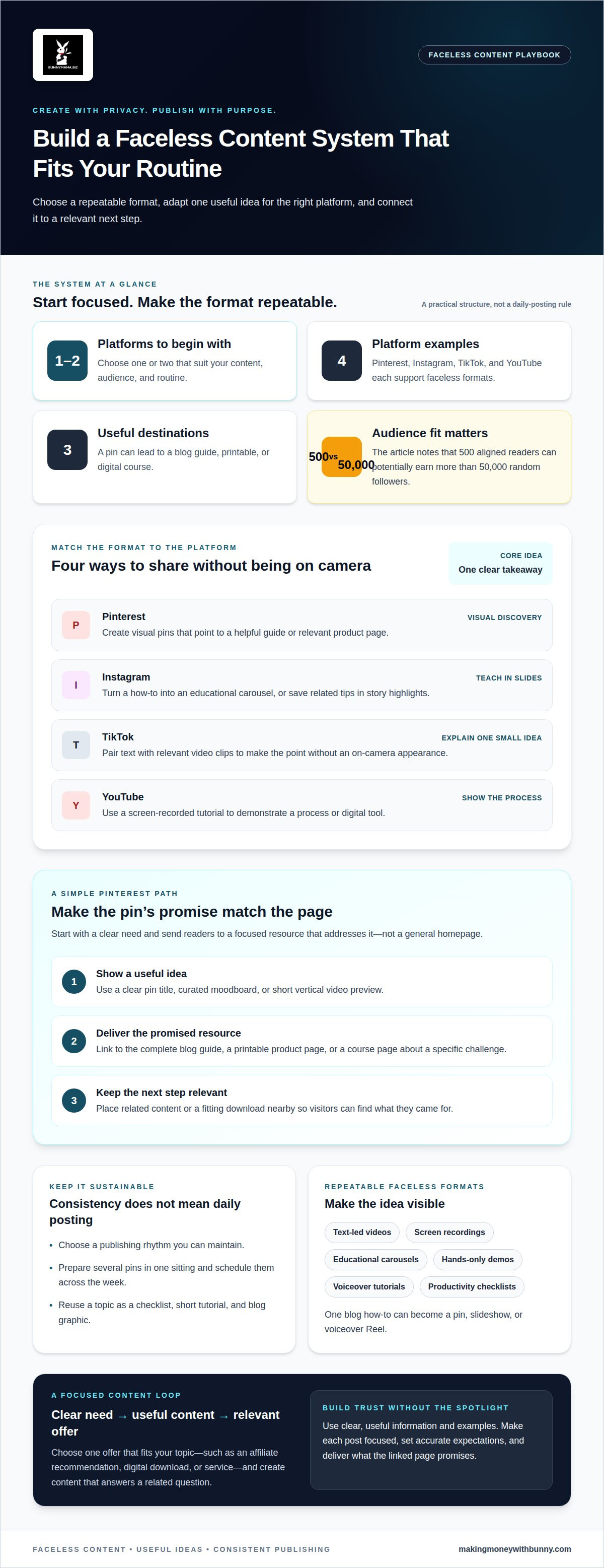
Platform-specific faceless content strategies
Faceless content shares useful ideas without showing the creator’s face. The format can vary by platform, audience, and topic.
Choose a repeatable format that makes one idea easy to understand, then adapt it for each platform.
Faceless Content Formats
Faceless content uses visuals, text, or narration instead of an on-camera face. Repeatable formats help explain ideas without requiring a new style for every post. Try morning routine templates, affirmation quote carousels, journaling prompts, or productivity checklists. A blog how-to can become a Pinterest pin, slideshow, or voiceover Reel, giving one topic several useful formats.
Faceless User-Generated Content
Faceless user-generated content shows a product or experience without showing the creator’s face. A hands-only demonstration can show how a product works, while a screen-recorded walkthrough can explain an app or digital tool. You can also pair stock footage or B-roll with a voiceover tutorial. These formats make the process or result visible and give the content a clear purpose.
Faceless Instagram Content
Faceless Instagram content uses formats such as carousels and story highlights to share ideas without appearing on camera. Turn a blog how-to into a carousel with one step per slide, then save related tips in a story highlight. You can also repurpose a short vertical video as a Reel, using text or voiceover to explain the key point. Keep each post focused on one takeaway.
Online surveys, user testing, and microtasks don’t have a fixed payout. Task length, eligibility, and platform payment terms affect what participants receive. Read the task descriptions, eligibility requirements, and payment rules before taking part.
Compared with surveys or microtasks, content-based income takes time to build because posts need an audience and a fitting offer. The effort varies by format: a checklist takes a different approach from a narrated tutorial. Potential earnings depend on audience interest and how the content connects to an offer.
For faceless content, start with a phone or computer you already use to write, record screen demonstrations, or edit slides. The setup depends on the format: a screen tutorial needs recording and editing tools, while a text carousel needs clear slides. Keep the first version simple and add tools only when a specific task calls for them.
Building trust without showing your face
Trust comes from what your audience can verify, not from whether they see you on camera. Clear examples, useful details, and consistent follow-through can make a faceless presence credible.
Show care in every post: explain your process, state clearly what an offer includes, and deliver what the link promises.
Freelance Jobs Without Video Calls
Faceless freelance work means delivering a skill through written communication and finished work rather than live video. Options include blog writing, proofreading, transcription, graphic design, and virtual assistance. Build a short portfolio with relevant samples, such as a before-and-after edit or a sample article. Explain in your profile how clients can share project details and receive updates by email or messaging.
For brand partnerships, contact companies directly with sample content and basic performance metrics. A concise pitch can identify your niche, show a product demonstration, and explain how your audience engages with your posts. Keep examples relevant to the brand’s products, and make your role and deliverables clear.
Risks and Scams to Avoid
Online income scams may use pressure, vague job details, or promises of easy returns to rush your decision. Pause if a message demands payment to unlock work, asks for sensitive information before explaining the role, or promises guaranteed earnings. Review the offer, payment terms, and sender’s identity before sharing personal details.
Protect your work, too. Before starting a freelance project, agree in writing on the task, scope, payment method, and delivery expectations. Keep copies of messages and submitted work. For affiliate content, disclose your relationship clearly and describe products honestly. Accurate claims help readers make informed choices and preserve the trust you’re building.
Choose one trust signal to improve today: add a relevant sample, clarify an offer, or explain how a process works. Then use social media guides to shape a clear, steady content approach.
Bunnymama.biz: DWA 4.0 resources
Bunnymama.biz offers DWA 4.0 resources and social media guides for readers building an online business at their own pace. If you’re shaping a faceless content routine, the guides can help you organize your social media approach. Holiday Printables & Kids’ Activities offer a product category to explore when you’re considering digital downloads. The 50 Christmas Wrapping Paper Templates - Tiffany & Gold Collection | Editable Designs with PLR License provides a specific example of an editable digital product. Choose the resource that fits your next step, whether that’s learning about digital marketing or exploring product ideas. For a closer look, you’re welcome to visit makingmoneywithbunny.com.
Take One Thoughtful Step Forward
Your next move doesn’t have to be a complete business plan. Choose one question you can help answer, then shape it into a small piece of content that feels manageable to create. Notice the questions people ask afterward. Those details can guide your next content and help your online presence feel personal, even when you stay off camera.
Learning how to make money online without showing your face means building useful work and learning from people’s responses. Give yourself room to adjust your topic, format, or offer as you go. A steady, thoughtful approach can make the work easier to sustain.
If you’d like support as you plan your next step, contact Bunnymama.biz to get started. You can move forward at your own pace, one useful idea at a time.
Frequently Asked Questions
What are the best legitimate ways to make money online without showing your face?
Legitimate options include affiliate recommendations, downloadable products, freelance writing or editing, and product demonstrations filmed without showing your face. A useful starting point is matching one skill to one offer, such as selling a budget spreadsheet alongside practical money-planning content. Before committing, review the work involved, payment terms, and audience fit. Be cautious of opportunities that promise effortless income without explaining how earnings are made.
How do faceless creators earn money on TikTok, Instagram, and Pinterest?
Creators use TikTok, Instagram, and Pinterest to help interested people find offers, then earn through sales, affiliate referrals, or brand partnerships. Think of each platform as a different doorway: TikTok can introduce an idea, Instagram can provide supporting details, and Pinterest can lead visitors to a focused website page. Track which posts bring meaningful clicks or purchases, not just views, to refine what you share.
How much do online surveys, user testing, and microtask sites pay, and which are legitimate in the US?
There’s no fixed payout: task length, eligibility, and platform payment terms affect what participants receive. Assess an offer by reviewing its task descriptions and payment rules, and watch for pressure, vague job details, or promises of guaranteed earnings.
How do faceless online income methods compare by startup time, earning potential, and effort?
Content-based income takes time to build an audience and connect it with a fitting offer. The effort varies by format, from a checklist to a narrated tutorial, and earning potential depends on audience interest and how well the content connects to the offer. You can start with a phone or computer you already use.