

How to Build a Recognizable Brand With Faceless Marketing
A recognizable brand doesn’t need your face on camera. Faceless marketing without video can work through clear writing, useful graphics, consistent design, and a voice your audience recognizes.
If being on camera feels uncomfortable or doesn’t fit your day, you still have plenty of ways to show up online. Choose formats you can keep using and give them a familiar look and feel.
This guide explains how to choose faceless formats, use AI and stock assets thoughtfully, and build a brand people recognize across your content. We’ll also cover the small choices that tie posts together, from visual style to wording. Start with one format and a few simple brand cues, then build at a manageable pace.
Key Takeaways
- Use animation, stock footage, or screen recordings to explain ideas without appearing on camera.
- Build silent content with clear on-screen text, captions, and visuals that carry the message.
- Choose a small set of visual and writing cues, then use them consistently so your content feels familiar.
- Match each format to the job it needs to do, and start with digital assets that make creating easier.
Can I use AI, stock footage, and voiceovers?
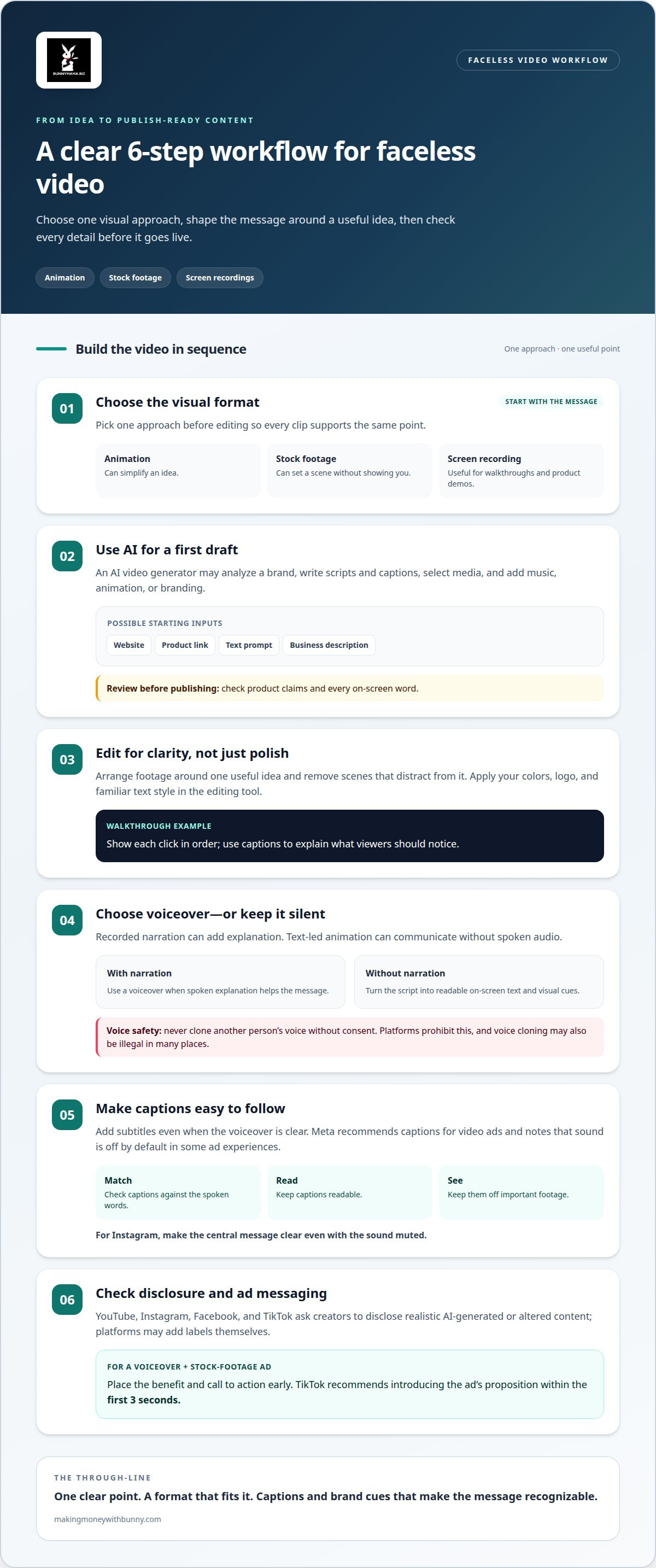
- Choose a visual format that suits your message. Animation can simplify an idea, while stock footage can set a scene without showing you. Screen recordings work well for walkthroughs, such as showing where to find a setting or how to use a digital product. Pick one approach before editing so every clip supports the same point.
- Use an AI video generator to create a first draft. These tools may analyze a brand, write scripts and captions, select media, and add music, animation, or branding. You can often provide a website, product link, text prompt, or business description. Review every detail before publishing, especially product claims and on-screen wording.
- Edit for clarity, not just polish. Arrange footage around one useful idea, then remove scenes that distract from it. Add your colors, logo, and familiar text style in the editing tool. For example, a short screen recording can show each click in order while captions explain what viewers should notice.
- Decide whether the content needs a voiceover. Recorded narration can add explanation, while text-led animation works without spoken audio. Never clone another person’s voice without consent. Platforms prohibit this, and voice cloning may also be illegal in many places.
- Add subtitles even when your voiceover is clear. Meta recommends captions for video ads and notes that sound is off by default in some ad experiences. Check that captions match the spoken words, remain readable, and don’t cover important footage. On Instagram, make the central message clear even with the sound muted.
- Handle AI disclosure and ad messaging carefully. YouTube, Instagram, Facebook, and TikTok ask creators to disclose realistic AI-generated or altered content, and may add labels themselves. For a voiceover and stock-footage ad, place the benefit and call to action early. TikTok recommends introducing the ad's proposition within the first 3 seconds.
Faceless marketing without showing a face or using a voice
- Choose a platform based on how your audience discovers information. Instagram and Pinterest suit visual posts, carousels, and graphics. LinkedIn can work for professional insights, while Facebook supports community discussions. For example, share a short checklist as an Instagram carousel, then adapt its key points for LinkedIn.
- Compare campaign costs by considering the work involved, not just the format. A video campaign may require filming, editing, or voice talent. A faceless campaign may need writing, graphics, software, or paid advertising instead. Key cost drivers include production time, tools, and whether you pay to reach an audience.
- Build a no-voice post around one clear benefit. Use a headline, a few supporting points, and a visual example. A meal planner, for instance, could show a weekly menu beside a simple shopping list. The audience can understand the offer without hearing narration or seeing a creator.
- Use an AI-generated avatar only if it adds something useful. A virtual character can guide viewers through a product idea, but it shouldn’t replace clear information. Keep its appearance and manner consistent with your brand. Don’t present a generated character as a real customer or expert.
- Try AI avatar or voiceover tools as optional production aids. Start with a short script, then review the generated voice, pronunciation, and timing. If you want no voice at all, turn the script into on-screen text. Use readable captions and visual cues to make each point easy to follow.
- Give every format a shared visual and verbal identity. Choose a small color palette, a repeatable layout, and a few phrases that sound like your brand. For example, use the same title style on a Pinterest graphic and an Instagram carousel. A consistent character and tone help audiences recognize your faceless content.
- Keep your next step manageable: draft one useful post and adapt it for another platform. If you're planning a faceless business, explore ideas for shaping your next content step as part of that plan.
Recognizable brand identity without a face
Build trust by making each post useful, accurate, and consistent. Show your process through clear examples, honest product details, and dependable customer communication.
Review Faceless Brand Examples
Study a recipe channel, an educational newsletter, and a product-focused account. Notice how each uses recurring colors, layouts, and subjects to become recognizable without a camera-facing creator. Check that the examples make their purpose clear and use consistent visuals. Don’t copy another brand’s character or templates. Borrow the principle, then shape a style for your audience.
Build Trust Through Privacy and Brand Ownership
Choose what to keep private, then make your brand’s public information easy to understand. A business can avoid showing its owner while still explaining what it offers, how customers can get support, and what each product includes. Keep account access and original files under your control. This lets you scale production without relying on one person’s image or personal profile.
- Set three repeatable visual cues. Choose a color palette, a title style, and a simple graphic treatment. Apply them to an educational carousel and a product announcement so both feel connected.
- Write a short voice guide. Choose a few words that describe your tone, then use them when drafting captions and customer replies. For example, a calm, practical brand can explain one benefit without making oversized claims.
- Edit every template before publishing. Replace generic phrases, check details, and adjust colors or spacing. Customize AI-produced video branding too, so generated content matches your established identity.
- Separate privacy from anonymity about the offer. You can keep your face private while clearly naming the product, its intended use, and its limits. That clarity helps customers make informed choices.
Faceless marketing formats and digital assets
For small businesses, a useful strategy is to choose one platform and a repeatable format, such as an Instagram carousel. Create text-and-graphic posts by pairing one clear message with readable copy and a supporting visual.
-
Choose Faceless Formats and Digital Assets
Start with a format that suits your offer and how people learn about it. A small shop might use product graphics, while a consultant could share a checklist or educational carousel. Choose assets you can update, such as editable templates or a simple animation. If time is limited, avoid formats that need constant production.
-
Create Social Content with Text, Images, and Graphics
Write a short script before designing each post. Start with one audience need, then give a practical answer and a next step. Pair the text with a relevant image, clear labels, or simple graphics. Keep the main message easy to scan on a small screen. For example, turn a tip into a swipeable carousel with three steps.
- Match each format to its platform and purpose. A YouTube tutorial can explain a process with screen captures and captions, while a Pinterest graphic can help people save a checklist. For commerce, create a product comparison card showing features and use cases. Keep the core message consistent, but adjust the layout for each platform.
- Build a small library of reusable digital assets. Save approved product descriptions, background images, graphic elements, and caption drafts together. Then adapt them into a carousel, a text post, or an animated explainer. Check every version for accurate details and readable text before publishing. Reuse the idea, not identical copy everywhere.
- Choose one content format to make first, then refine it with a social media guide as you plan your posts.
Bunnymama.biz: DWA 4.0 resources
Bunnymama.biz is a natural next step if you’re ready to turn faceless marketing ideas into a practical learning plan. Its DWA 4.0 resources and social media guides offer digital resources for readers building an online business and planning their content at their own pace.
For a seasonal creative project, explore Holiday Printables & Kids’ Activities or the 50 Christmas Wrapping Paper Templates - Tiffany & Gold Collection | Editable Designs with PLR License. These digital offerings can give you ideas for creating and presenting themed content. Choose the resource that fits what you’re working on now, rather than trying to take on everything at once.
Visit Bunnymama.biz whenever you’re ready to explore the resources.
Take Your Next Small Step
Building a brand through faceless marketing without video starts with a choice you can sustain. Decide what you want people to remember after seeing your next post. Then make one small change to reinforce it, such as sharpening your message or choosing a visual style that feels more like you.
Your brand can grow without asking you to step in front of a camera. Give yourself room to learn from each post, keep what works, and adjust what doesn’t. A steady, thoughtful approach can make marketing more manageable alongside everything else on your plate.
If you’d like to talk through your marketing plans and explore whether Bunnymama.biz’s resources fit your next step, contact Bunnymama.biz to discuss your marketing. There’s no need to have every detail figured out first. Start with the idea you have today, and take it one gentle step at a time.
Frequently Asked Questions
What Is Faceless Digital Marketing?
Faceless digital marketing promotes a business without making the owner’s face the main content. It can use written posts, diagrams, product photography, email, or tutorials without audio. The brand earns recognition through its subject, design, and useful answers. For example, a home-organizing account could publish printable checklists and room-by-room tips under one consistent name, with no presenter on screen.
How do I choose a faceless niche?
Choose a niche where you can connect a clear audience need with topics you can explain or research regularly. Write down common questions, then draft several useful post ideas for each. A pet-care account, for instance, might focus on beginner-friendly routines instead of covering every animal topic. Make sure the niche has a clear audience and a practical path to an offer.
Does faceless mean anonymous or fully automated?
No. Faceless means you don’t rely on showing yourself. Your business can still use a public name and communicate directly with customers. It also doesn’t mean every task runs automatically. You remain responsible for checking claims, responding to questions, and deciding what gets published. A scheduling tool can prepare posts, but someone should review them for accuracy and fit.
How do faceless businesses make money?
Faceless businesses earn through offers that suit their audience, such as digital products, subscriptions, affiliate recommendations, or sponsored content. A study-notes account, for example, might sell original revision sheets after sharing helpful study tips. Choose an income model that matches your audience’s needs, and explain clearly what buyers receive. Trust grows when recommendations and promotions are easy to recognize.
What is faceless marketing, and how does it work without video?
Faceless marketing without video uses other ways to attract and help potential customers. A business can publish searchable articles, email tips, text posts, static graphics, or downloadable guides. For example, a meal-planning brand could share a written weekly menu and link to a recipe collection. Each format helps people discover the brand, understand its offer, and take a next step.
What tools can help create faceless marketing content, and how much do they cost?
Writing, design, scheduling, and analytics tools can support different parts of content creation. A simple workflow might use a writing app for captions, a graphics editor for carousel posts, and a planner to organize publishing. Costs depend on the tools, features, and usage you choose. Free plans and paid subscriptions have different limits, so match tools to your actual workflow before adding more.