

4 Guides to Set Social Goals and Reach the Right Audience
You don’t need to be everywhere to find the right people. Start with one or two social platforms where your audience is active, share organic posts to learn what resonates, and use those lessons to shape your goals before you spend on ads. The right social media guides for online business make that process feel clearer and more manageable.
When every platform seems to need a different plan, it’s easy to feel pulled in several directions. Start small. These four guides cover choosing a platform that fits your audience and content, testing posts before paying to promote them, learning what followers care about, and measuring outcomes that matter to your business. Choose what fits your time and goals, then build from there.
Key Takeaways
- Focus on one or two platforms that fit your audience and the kind of content you can share consistently.
- Use organic posts to learn which ideas connect before putting advertising behind them.
- Match each social media goal with a useful measure, such as website visits, engagement, or leads.
- Let audience interests and interactions guide what you post and how you refine your approach.
1. Which Social Media Platforms Should I Use for My Business?
Choose one or two channels where your audience spends time and you can post consistently. A focused presence is easier to maintain than several neglected profiles. First, name your goal, such as raising brand awareness, driving website visits, or making sales. Then consider audience fit, available time, content skills, and the formats each platform supports.
Match the platform to your business model and the people you want to reach. Instagram suits visual brands, lifestyle products, and e-commerce; TikTok fits short-form video and consumer brands. LinkedIn supports B2B marketing, professional services, and thought leadership. YouTube works well for tutorials, education, and product demonstrations. Facebook can serve local businesses, communities, and broader audiences, while Reddit suits niche communities and discussion.
Demographics can help narrow the choice, but they shouldn’t replace audience research. Instagram is particularly suited to reaching people aged 18 to 44. Snapchat can help reach people under 35, while LinkedIn is a natural fit for professional audiences. Look at competitors for clues about popular formats and audience questions, then choose a channel that fits your resources rather than copying their entire plan.
Build a simple content calendar around your goal and capacity. Match each idea to a format, such as a product photo, short video, tutorial, or answer to a customer question. A handmade shop might share product demonstrations; a consultant could offer practical tips. Plan themes and posting days, then respond to comments to make your content feel like a conversation.
To drive website traffic or sales, give each post a useful next step. A tutorial can point readers to a related product page, while a product post can explain where to learn more. Make the link and message relevant to the post’s purpose.
For content covered by U.S. FTC rules, clearly disclose paid or affiliate relationships alongside the endorsement. Protect audience trust by sharing only content you have permission to use, limiting personal data collection, and following each platform’s policies. These practices help reduce privacy, copyright, and account-policy risks.
2. Using organic posts to test content before advertising
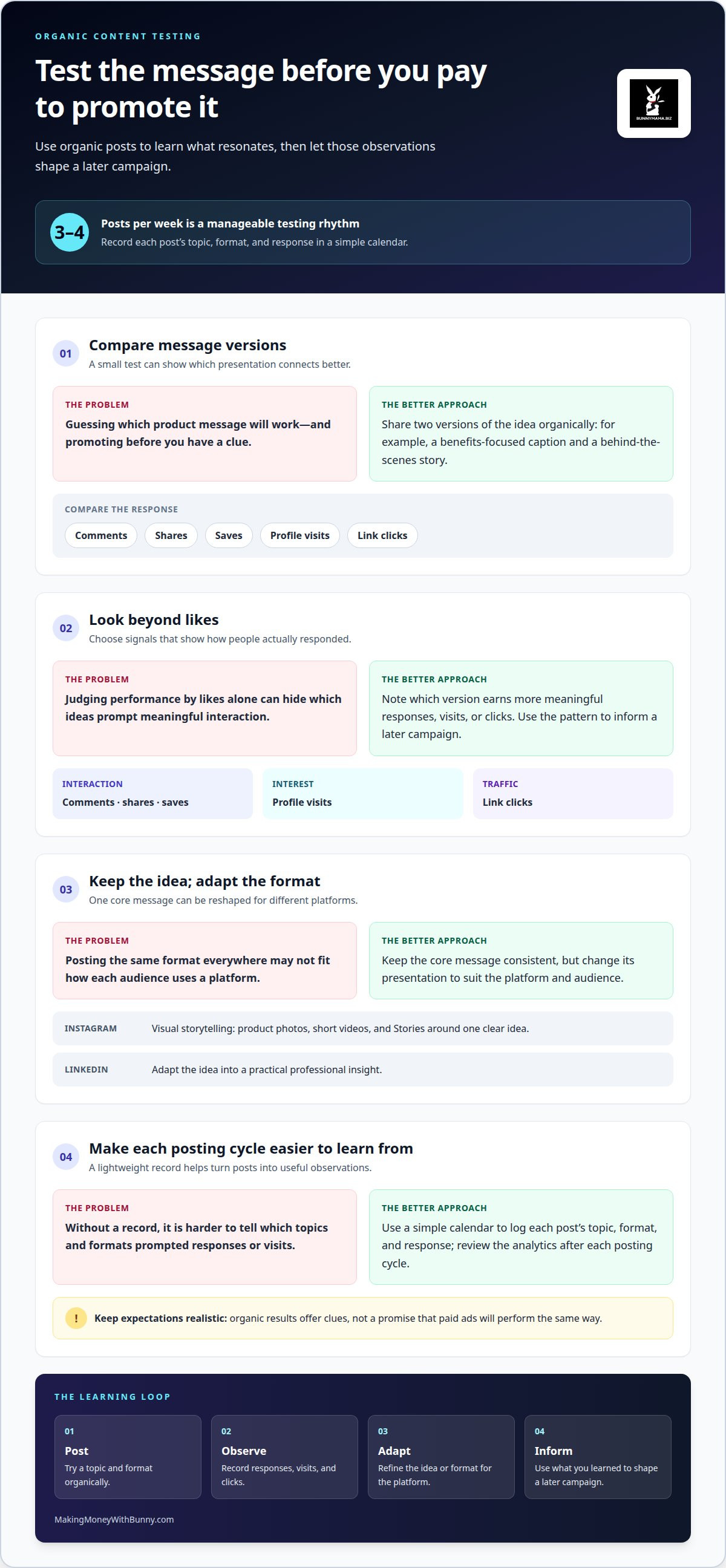
Organic posts let you test an idea before investing in promotion. Share two versions of a product message, such as a benefits-focused caption and a behind-the-scenes story. Compare comments, shares, saves, profile visits, and link clicks. If one format leads to more meaningful interaction, use what you learn to shape a later campaign.
Keep the test manageable. Try posting three to four times a week, then record each post’s topic, format, and response in a simple calendar. A photo, short video, and customer question can present the same theme in different ways. Note which version connects with followers instead of judging performance by likes alone. Organic results offer clues, not a promise that paid ads will perform the same way.
Tailor your schedule to each platform. Instagram lends itself to visual storytelling, so plan product photos, short videos, and Stories around one clear idea. Hashtags are free to use; choose relevant ones that describe the post, not unrelated tags. On LinkedIn, adapt the idea into a practical professional insight. Keep the core message consistent while changing the format to suit each audience.
Scheduling and account-management tools can help organize a content calendar. Costs vary by tool and plan, often depending on features and the number of accounts managed. Start with a simple calendar, and consider scheduling software if coordinating channels becomes difficult. After each posting cycle, review analytics and note which topics prompt responses or visits.
Keep the visuals and voice true to your brand. For example, a maker can show a product being used at home, then answer a follower’s question in a follow-up post. This kind of sharing gives the audience something useful and helps you learn which messages feel natural. For more ideas to plan consistent content, explore these social media guides.
3. Setting goals and measuring business outcomes
Start your social media strategy with one business objective: brand awareness, website traffic, leads, or sales. Choose the intended outcome before selecting a metric. SMART goals are specific, measurable, attainable, relevant, and time-bound. This keeps a campaign focused instead of counting every Facebook reaction. Social media guides for online business owners can help turn broad intentions into clear, trackable goals.
Match each measure to your goal. For awareness, track reach, impressions, video views, and shares. For engagement, monitor comments, saves, shares, and engagement rate. For website traffic, follow link clicks, click-through rate, and website sessions. Conversion-rate analytics can also show how paid and organic posts contribute to business outcomes.
Make the target concrete. For example, a post with 15 clicks and 100 impressions has a 15% click-through rate. A SMART goal could aim to increase website clicks by 20% over three months. Another example is gaining 500 new followers in three months. Treat these as sample targets, then choose a goal suited to your starting point.
Break long-term goals into smaller checkpoints. If you want more qualified leads, first measure relevant clicks, then track which visits become inquiries. Compare results by channel, post format, and audience demographics. A video may bring views, while a Facebook link post may send visitors to a product page. The right measure depends on the business outcome you want.
Review analytics on a regular schedule, such as after each campaign or planning cycle. Keep a simple record of the goal, metric, result, and next adjustment. If comments rise but website sessions stay flat, revise the post’s link or next step. If traffic grows without conversions, review the page visitors reach. Social media guides for online business can help organize these observations into a strategy you refine over time.
4. Setting social media goals and understanding audiences
Focus on the people your business can help, not a broad label like “everyone.” Create a simple audience persona based on their needs, interests, questions, and buying motivations. For example, a homewares shop might target people seeking practical gift ideas, while a consultant may focus on business owners looking for specialist advice. Use these details to set a relevant goal, such as answering common questions or driving product-page visits.
Then connect that audience to a suitable platform. Forty-eight percent of customers prefer using social media to learn about small businesses. Snapchat can help reach people under 35; X suits audiences aged 25 to 50, particularly men. LinkedIn can serve professional audiences. These are starting points, not substitutes for observing who responds to your own posts.
Shape content around your audience’s interests. A local business could share community updates, while an online educator could post a short lesson and invite questions. Track which topics prompt thoughtful comments, shares, or direct messages. These responses reveal what followers need and help make your social presence more useful and human.
Audience research continues after you post. Review recurring questions, product feedback, and the words people use to describe their needs. Use these patterns to refine personas and choose goals. If followers ask how to use a product, create an explanatory post; if they want comparisons, make the next post clarify the differences.
Respond to negative comments with care: acknowledge the concern, offer a clear next step, and move personal details into a private conversation. Fifty percent of customers will leave a business that doesn’t respond to a negative social media post. For advertising, use audience interests to guide targeting, then judge results against your goal rather than reach alone.
For a practical next step, explore these social media guides to shape an audience-aware plan.
Bunnymama.biz: Social media guides
Bunnymama.biz offers social media guides for people ready to turn platform and audience choices into a clearer plan. Use them to support your next steps, from shaping content ideas to building a steady social presence. DWA 4.0 resources offer another learning option as you grow your online business at your own pace.
These resources are a natural fit if you want practical guidance to work through independently, rather than someone to manage your accounts. You can also explore Holiday Printables & Kids' Activities or the 50 Christmas Wrapping Paper Templates - Tiffany & Gold Collection | Editable Designs with PLR License for other digital product ideas.
If you’d like to learn more, you’re welcome to contact Bunnymama.biz.
Let your next post be a small, clear step
Build your social presence through steady choices, not a perfect plan. Choose one idea that reflects what your audience needs, then learn from the response. A useful routine is one you can return to, even during a busy week. Let your goals guide what you keep, adjust, or set aside.
The right social media guides for an online business can turn that routine into a more thoughtful practice. Keep listening as your audience changes, and let your content change with them. Each post can be a chance to connect more clearly, rather than another task you have to get exactly right.
If you’d like support choosing a next step for your business, share your goals with Bunnymama.biz. Start where you are, and let your approach take shape at a pace that feels manageable.
Frequently Asked Questions
Which Social Media Platforms Should I Use for My Business?
Choose platforms that fit how customers discover and consider what you sell. A visual product shop might use Instagram to show items in use, while a business selling expertise could share helpful discussions on LinkedIn. If people need demonstrations before buying, YouTube can host detailed walkthroughs. Start with the customer’s decision process, then choose a platform that makes useful information easy to find.
What is the difference between a social media ad and a social media post?
An organic social media post reaches people through your account, while an ad is paid promotion designed to show content to a selected audience. For example, you might publish a product announcement for existing followers, then pay to promote it to people with relevant interests. Both can support marketing, but make the purpose clear and assess each against its intended outcome.
What should a social media guide for an online business include?
A useful guide should connect business goals to practical daily decisions. Include your intended audience, chosen platforms, brand voice, content formats, posting workflow, and a way to review results. Add examples, such as turning one customer question into a short tip and a longer explanation. Explain who responds to messages and how feedback informs future content.
How often should an online business post on each social media platform?
There’s no universal posting frequency for every business or platform. Set a rhythm you can maintain, allowing time to create useful content and respond to followers. For example, a solo seller might plan fewer, stronger posts, while a business with a steady stream of updates may share more often. Review audience responses and adjust the schedule to fit your capacity.
What are the best practices for social media content, captions, hashtags, and visuals?
Give each post one clear purpose and write a caption that makes sense on its own. Use a relevant visual that honestly shows the product, process, or idea, and add descriptive text for people using assistive technology. On Instagram, hashtags can help label a topic, but keep them closely related to the post. A direct invitation, such as asking readers to share their experience, can encourage conversation.
Which social media metrics should online businesses track, and how do you measure ROI?
Track metrics tied to the action you want, such as qualified inquiries, product-page visits, or completed purchases. To assess return on investment, compare campaign-attributed revenue with advertising spend, using consistent tracking links or campaign records. For organic activity, consider the time and resources invested alongside measurable outcomes. More views alone don’t show whether social media contributed to business results.